Mandarin is gaining traction as a second language in UK schools, but teaching resources and community support remain limited.
The Bonsai Language Foundation’s goal is to raise Mandarin teaching standards and empower teachers with the tools to succeed.
Mandarin teachers across the UK are few and dispersed, making it difficult to collaborate, share resources, and support one another. Bonsai Language Foundation currently lacks a digital tool that builds connection, resource sharing, and continuous professional growth within the Mandarin teaching community.
Design a digital platform that becomes the central hub for Mandarin teachers in the UK where they can access high quality teaching resources, contribute materials, and build a sense of community.
Success will be measured by:

We lacked understanding of Mandarin teachers’ needs, wants, and expectations. First, we want to find out from the teachers:
We kicked off with a 3-day Lean UX workshop and user interviews
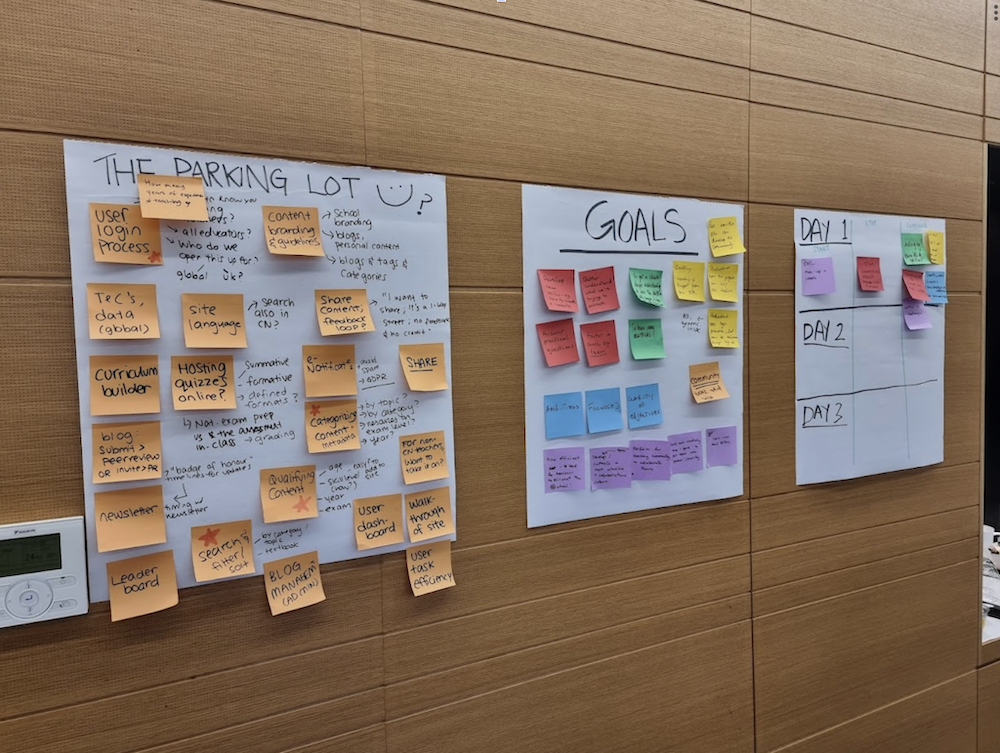
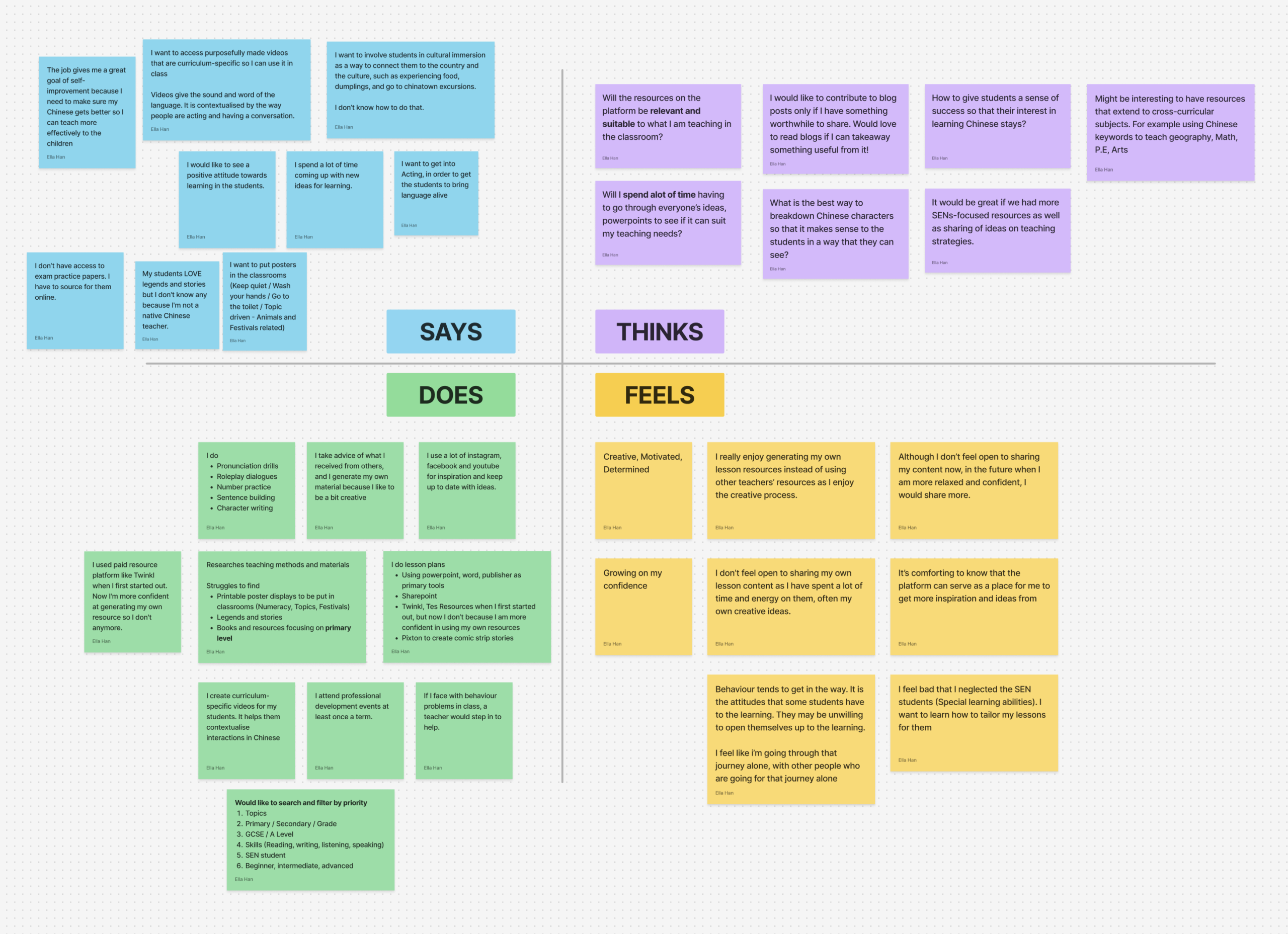
Post-its from workshop brainstorming |
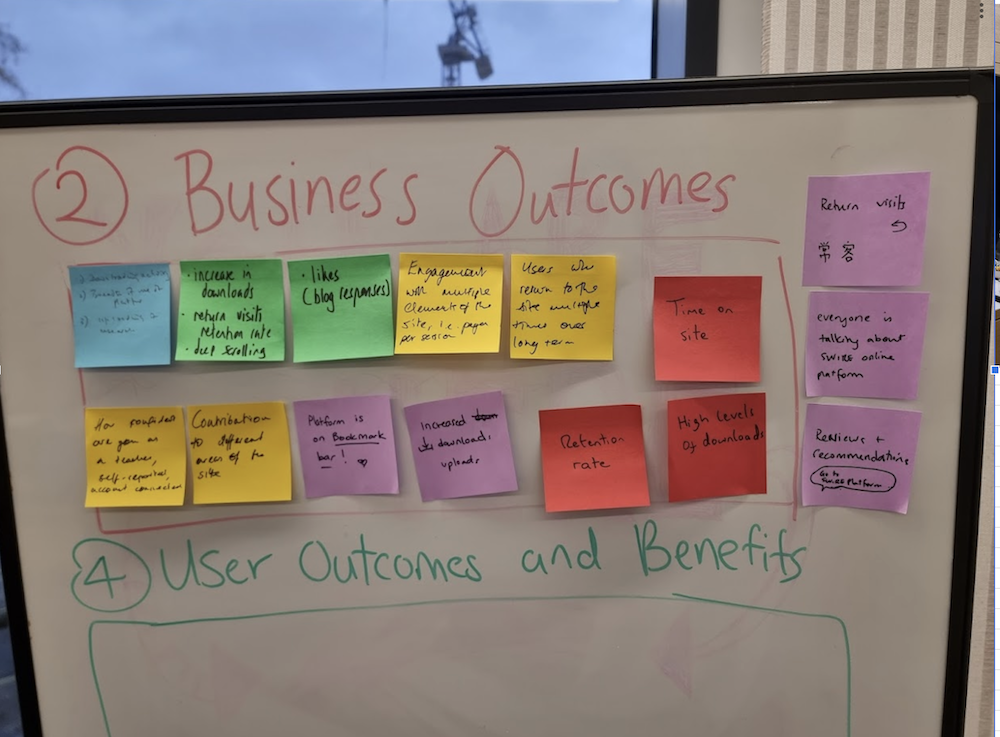
Putting the Lean UX framework into use. We mapped business outcomes so as to gain clarity. |
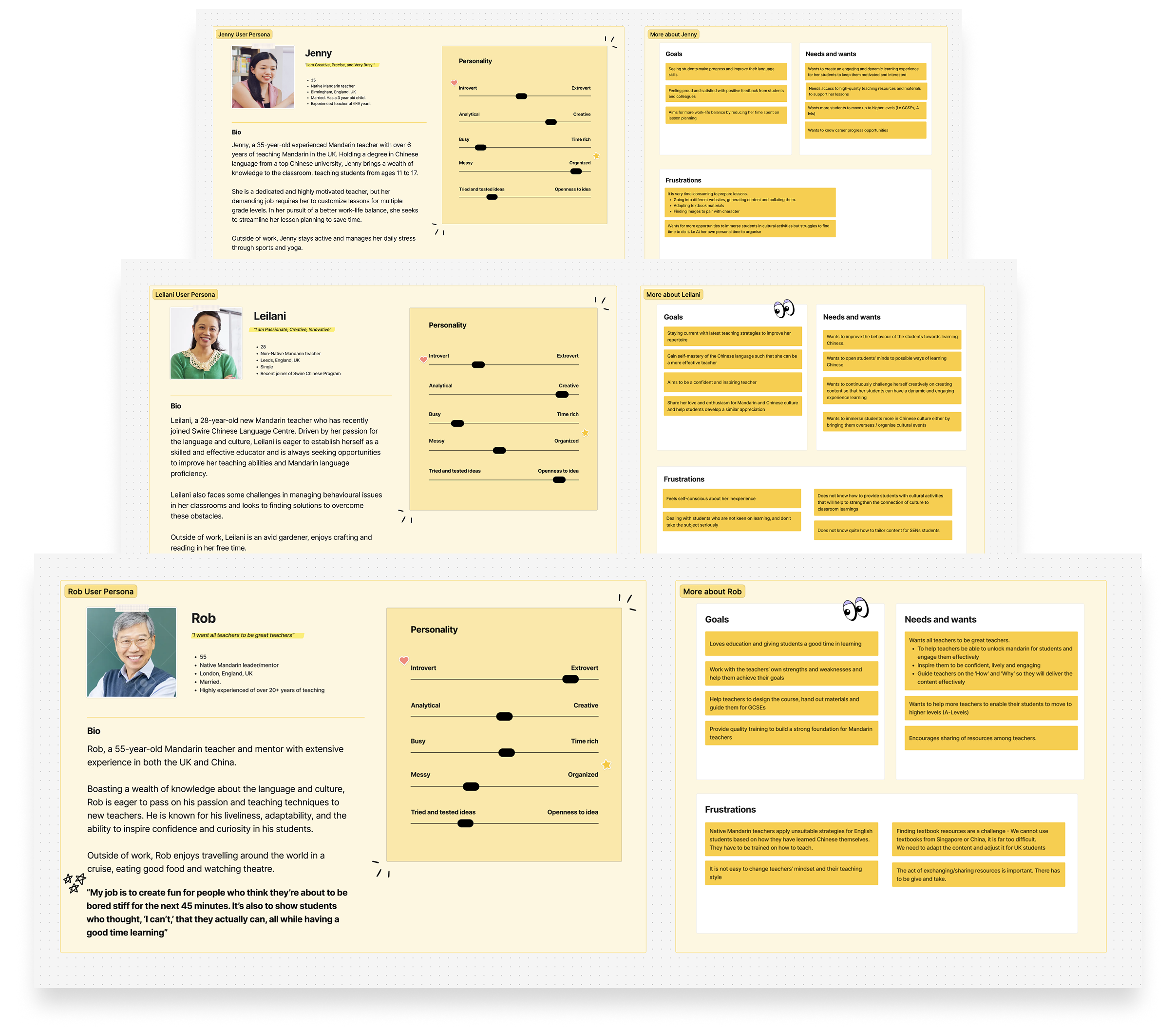
User personasThrough identifying user personas, we uncovered potential pitfalls and began addressing them. We also know which user group to prioritize on. |
|
|
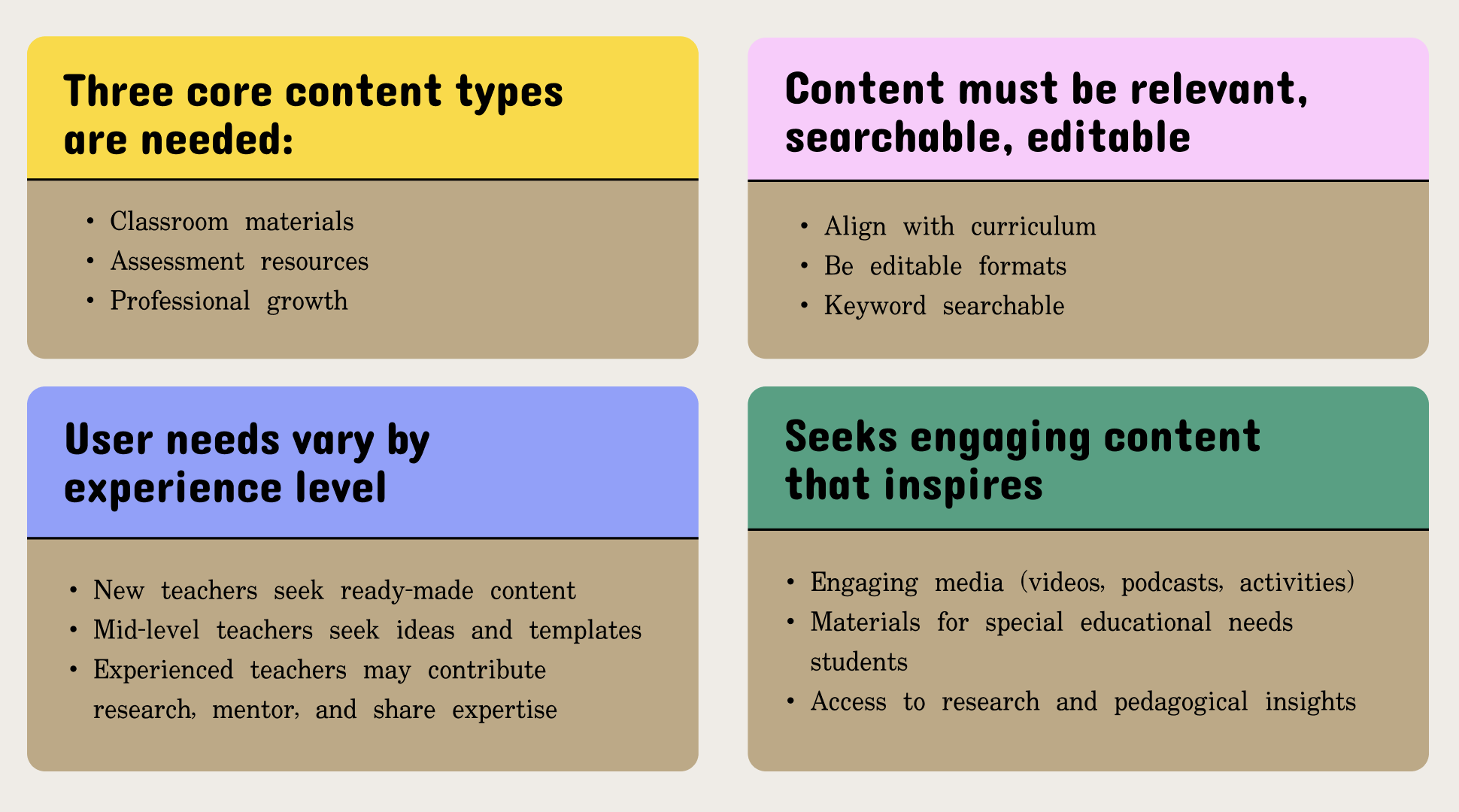
Affinity statementsBy clustering user insights into themes, it reveals wants, needs and pain points. It helps me to make clearer recommendations to our client |
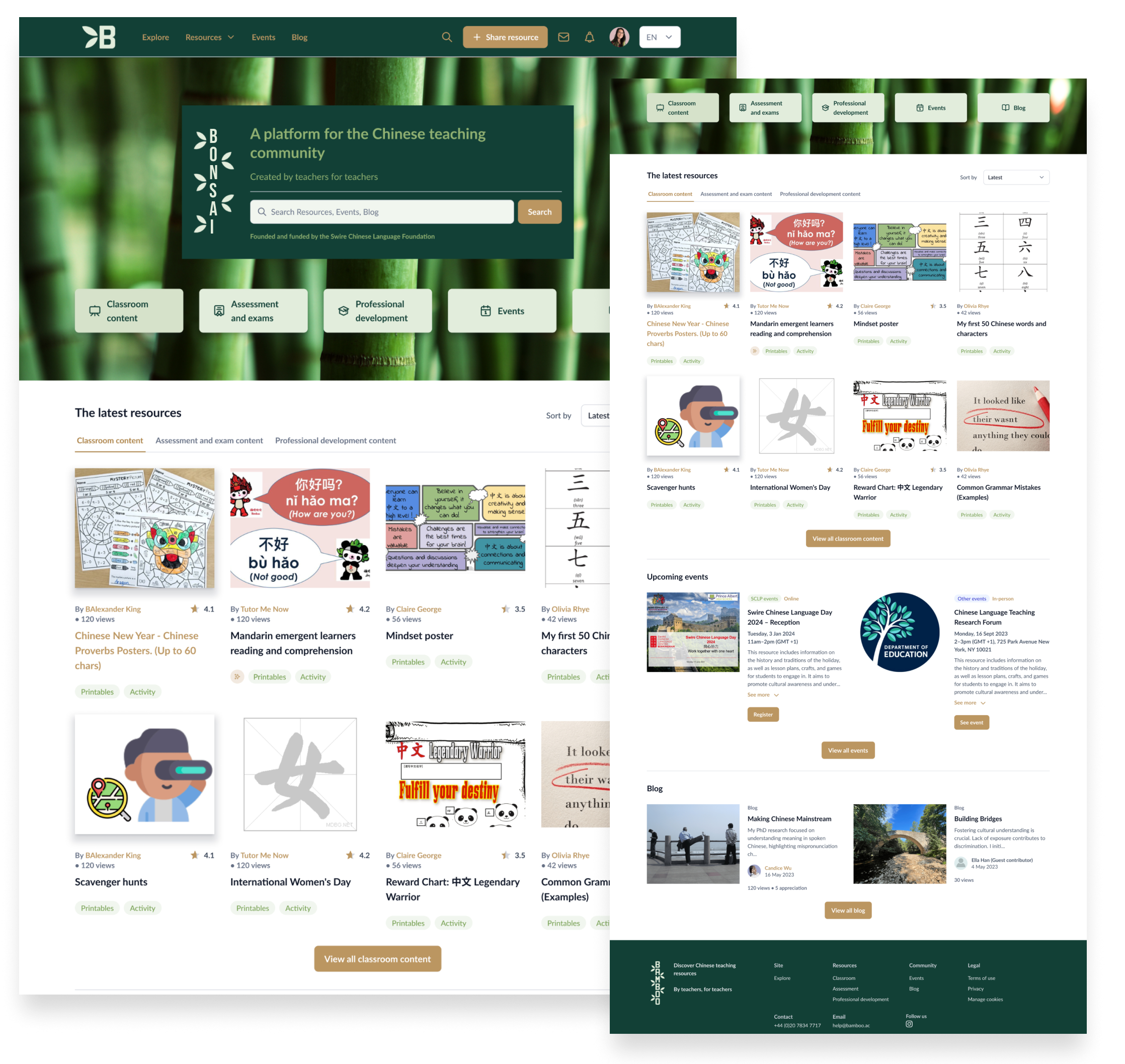
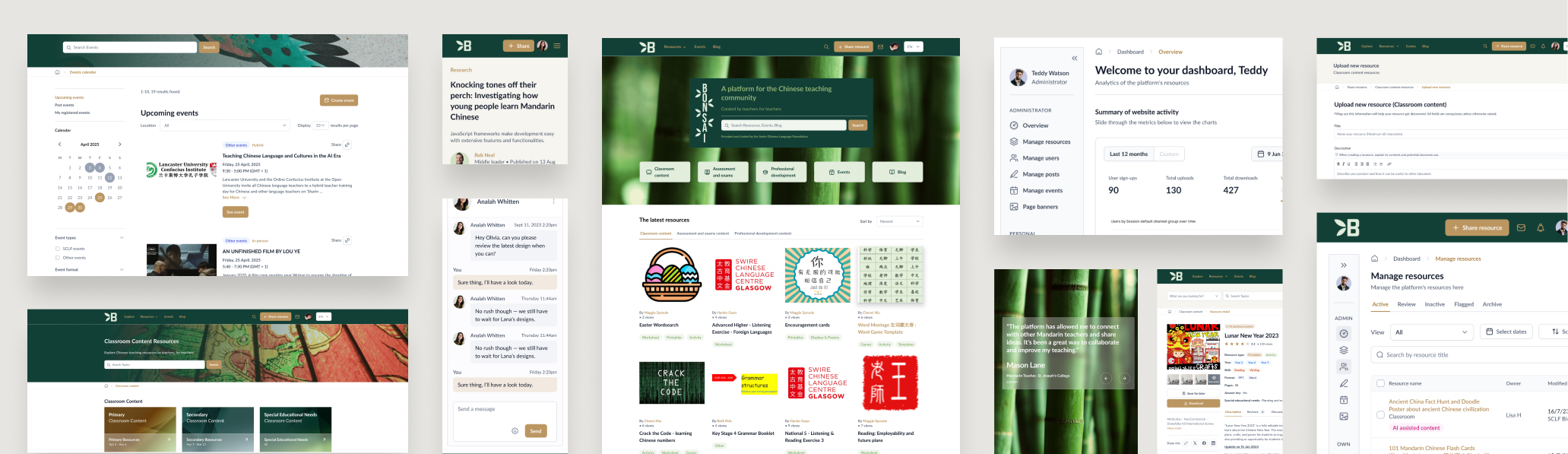
With a tight deadline, I dived straight into wire-framing to shape the product experience. I focus on making the features intuitive and reducing friction, especially for the teachers who are time-strapped by their profession.
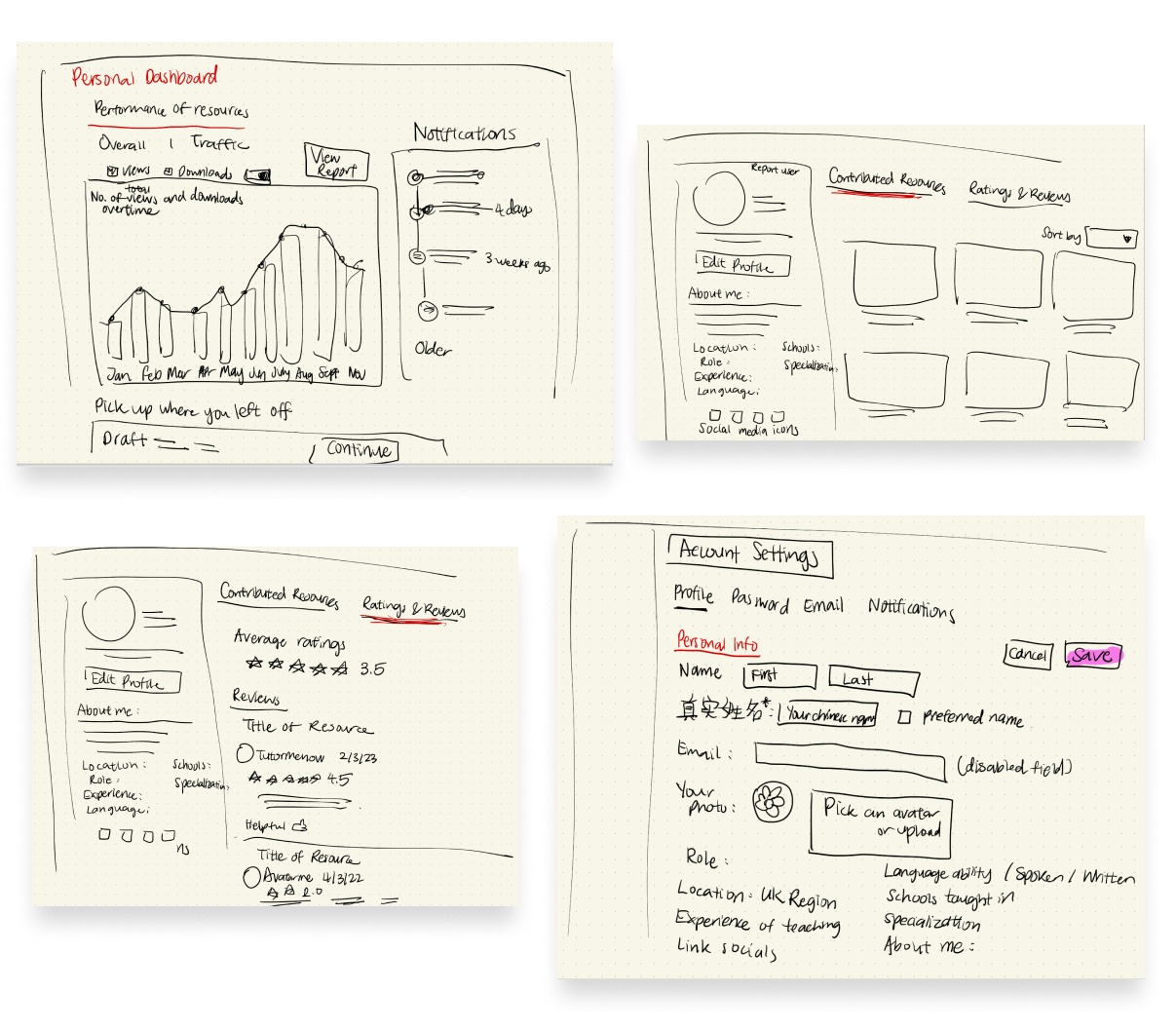
Wireframing |
|
|
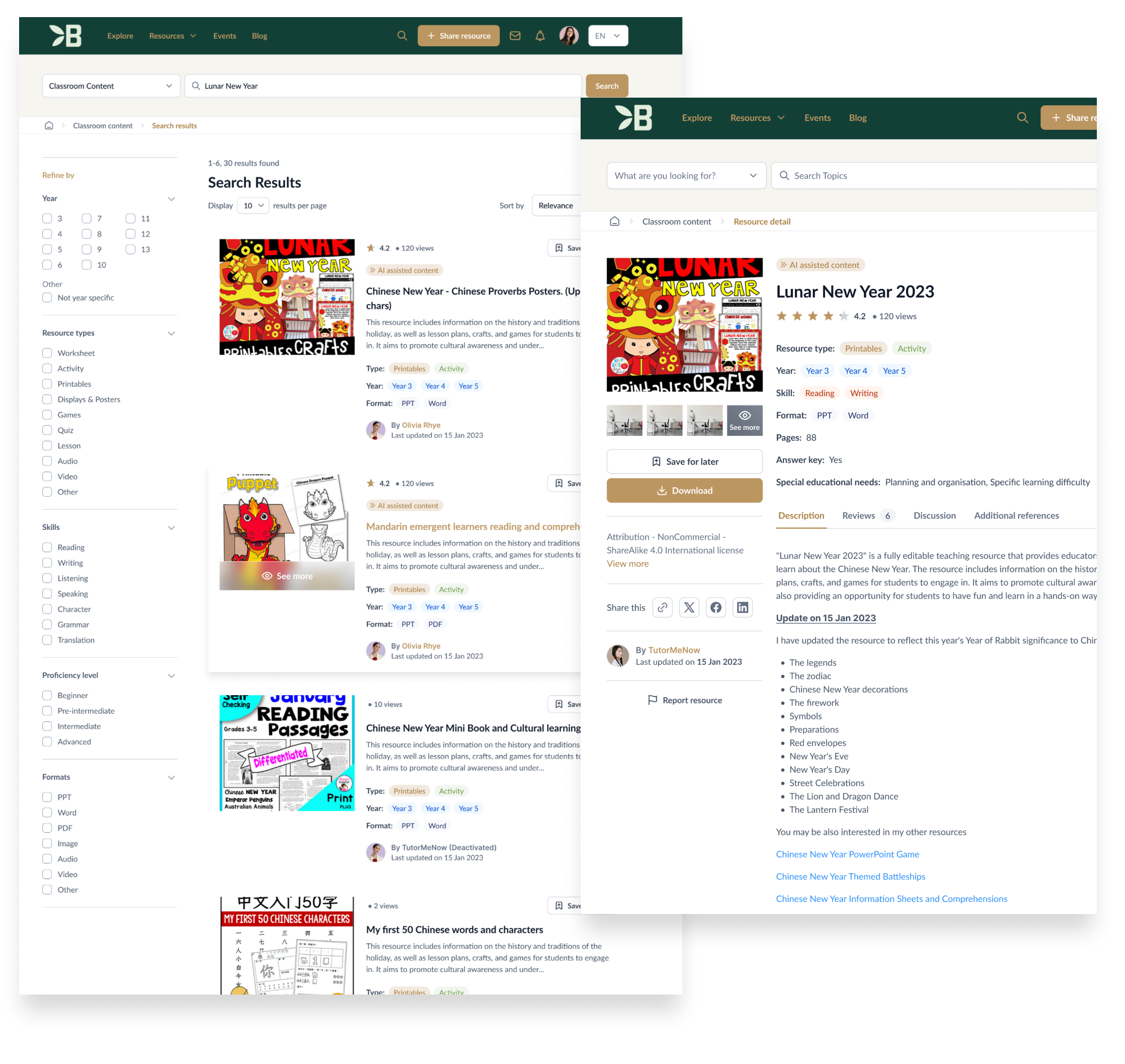
Search feature
|
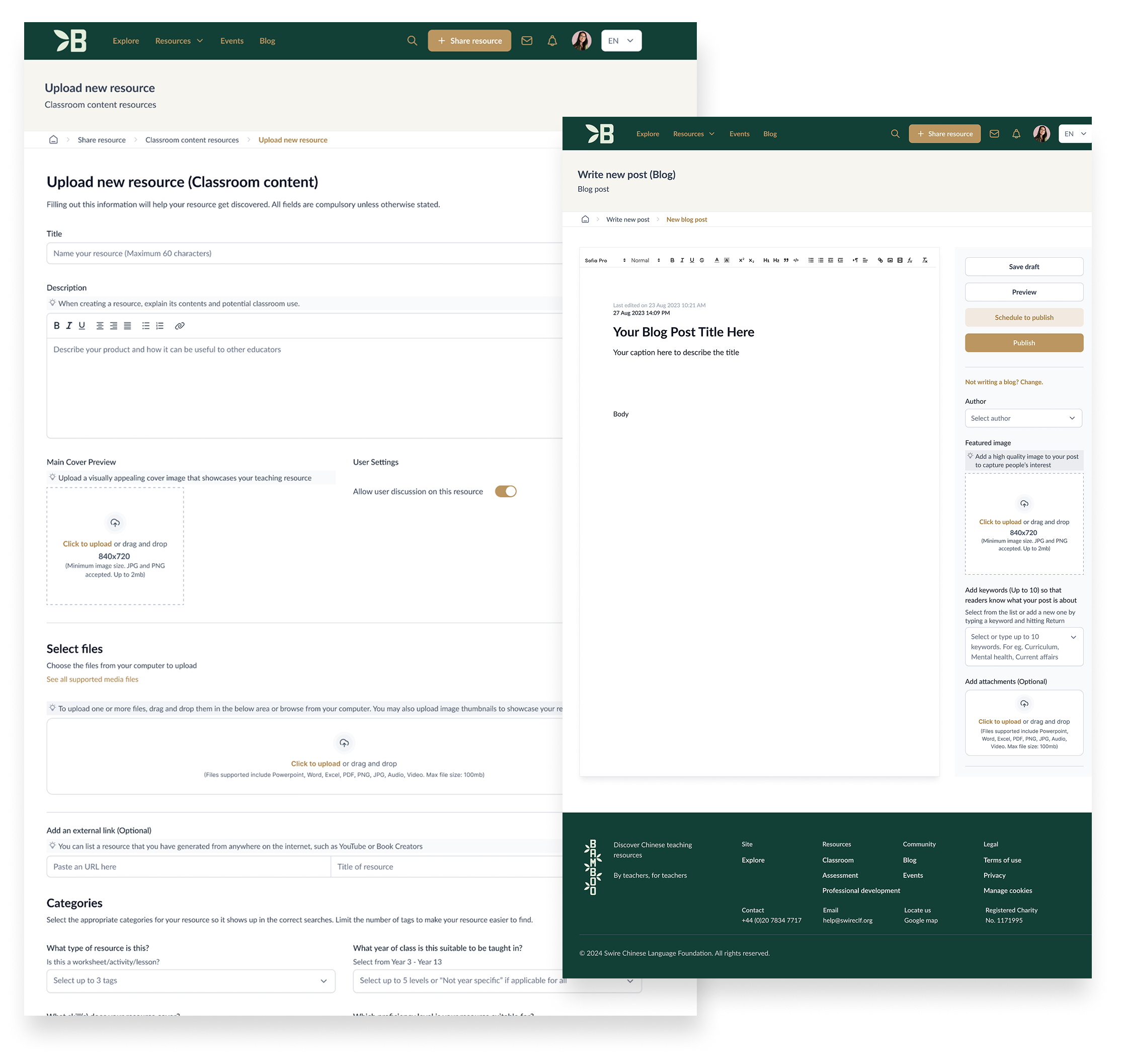
Uploading resourceUploading a resource involves multiple fields, which can be overwhelming for time-starved, non-tech-savvy teachers.
|
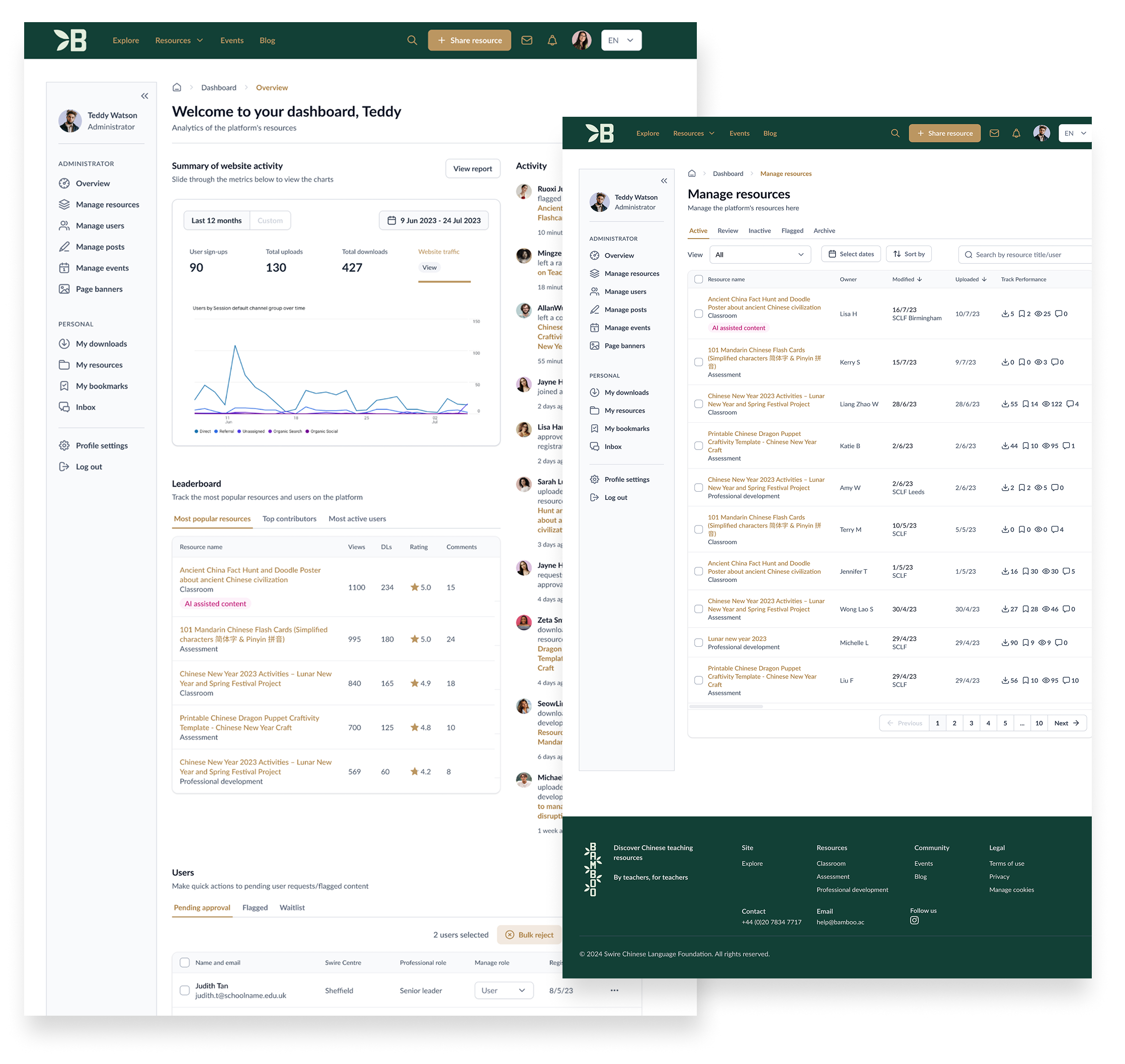
Admin management
|
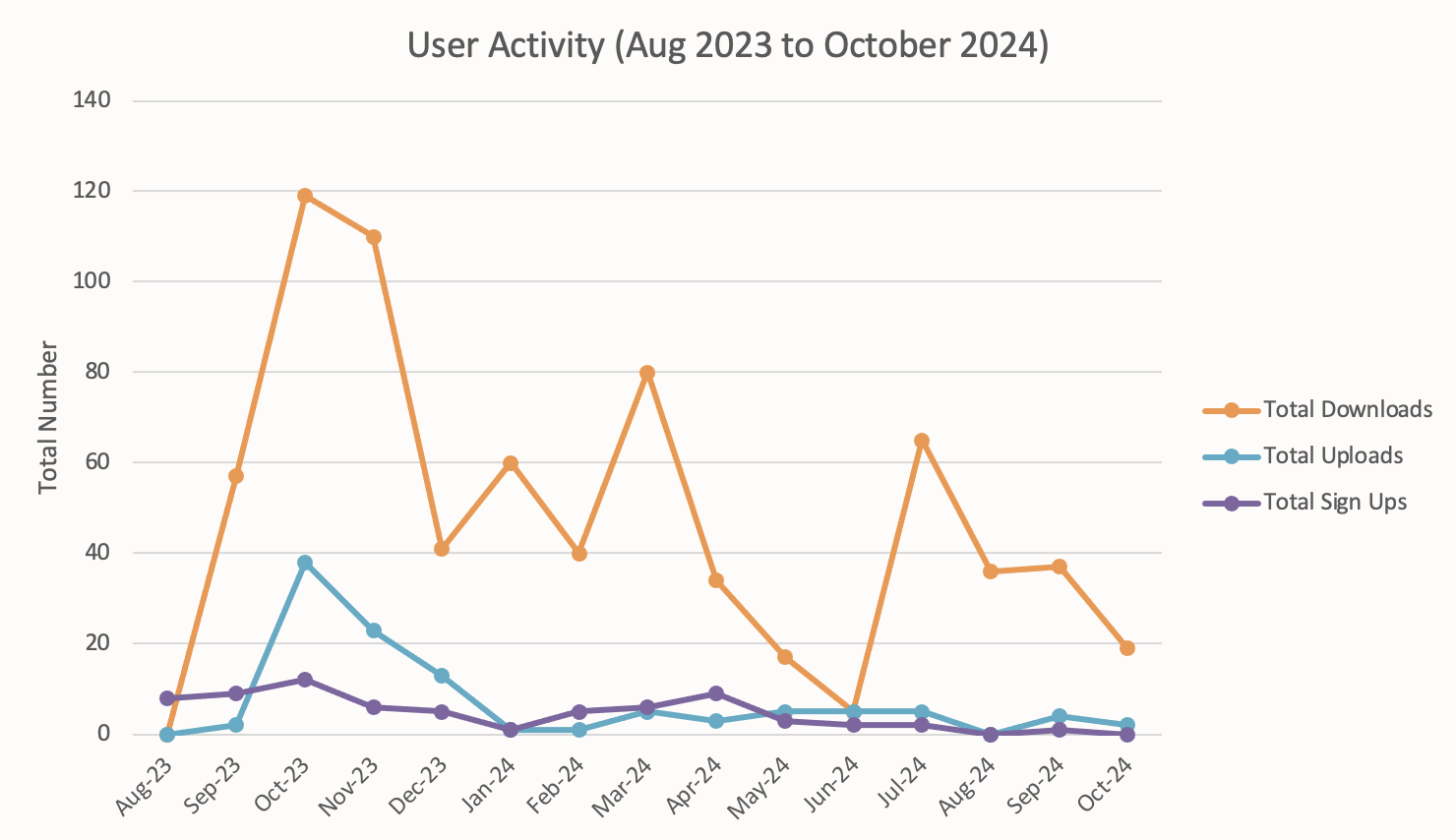
After we launched the website and let it run for a year. We studied our Google Analytics and user metrics to see how it was doing. We found that:
After initial uptake, it was hard to sustain interest of the users. The user activity began to go down trend. We can also see there is a trend of teachers preferring to download resource, rather than contributing it. Highlighting a potential area of improvement.
|
|
We wanted to investigate why the platform was not gaining much traction so we conducted usability interviews and concluded:
To reduce friction and effort on the users’ part, we put forth these recommendations:
When user uploads a resource:
When user retrieves a search result:
Software is not without groundwork promotion from the client side, as well as absolute trust to run the project autonomously, within careful consideration of the client’s budget and constraints.
Rigourous research has allowed me to unearth actual user problems and involve the team of Devs and stakeholders to solve the problems that UX alone cannot solve.