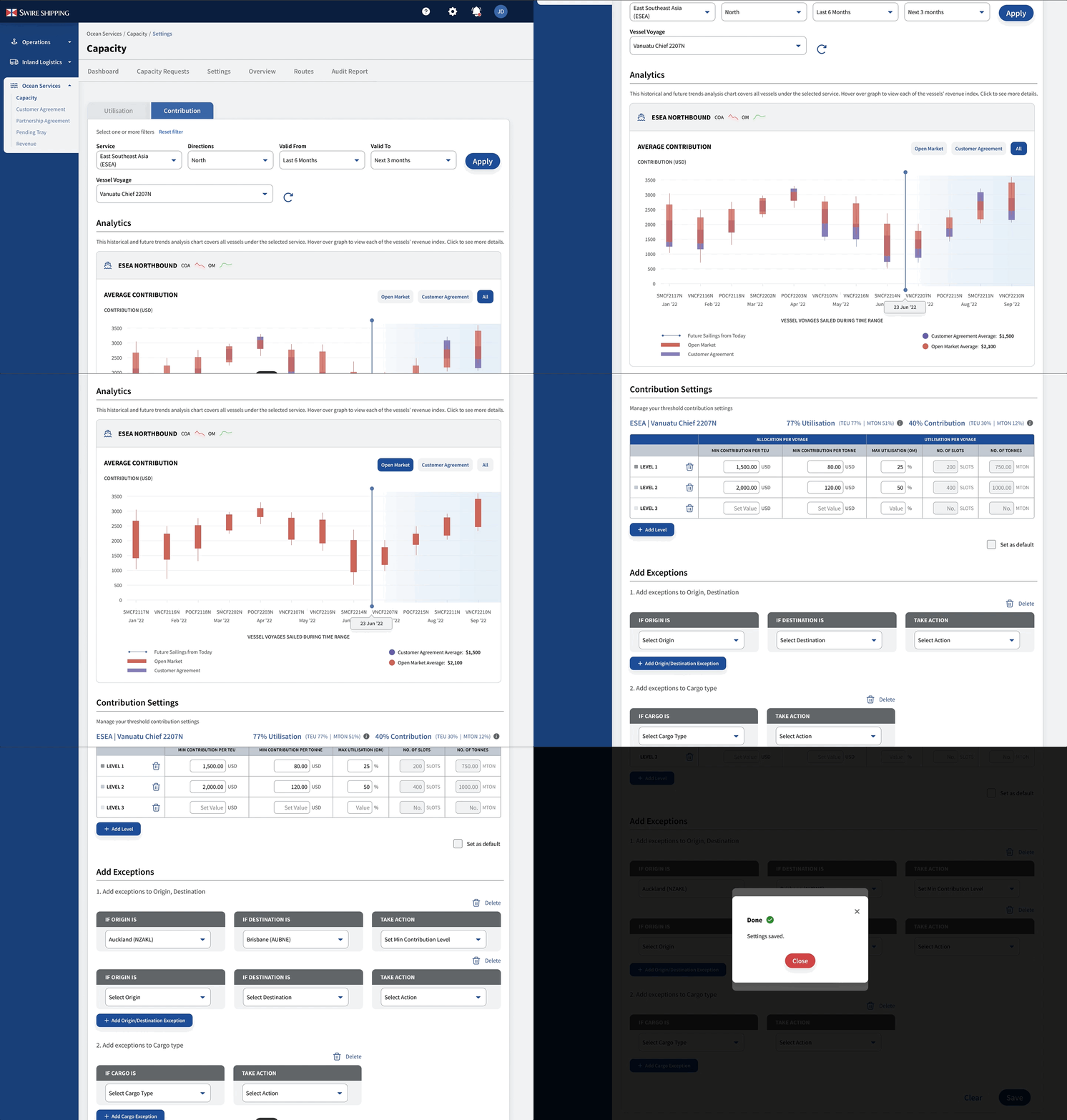
In the span of a 5-day design workshop, a prototype was produced in Figma and put into real test with the users.
The Context
Manual cargo allocation has resulted in underutilized loads, overbooked vessels, and frequent roll-overs—negatively affecting both customer satisfaction and profitability. The shipping company wants to develop a digital tool to optimize cargo planning and maximize revenue.
The Problem
- Inability to maximise utilisation of cargo types, leading to sub-optimal yields
- A greenfield idea which requires digitising multiple manual processes
- How to build fast, test fast and fail fast in 5 days?
What did we do? Our workshop agenda-
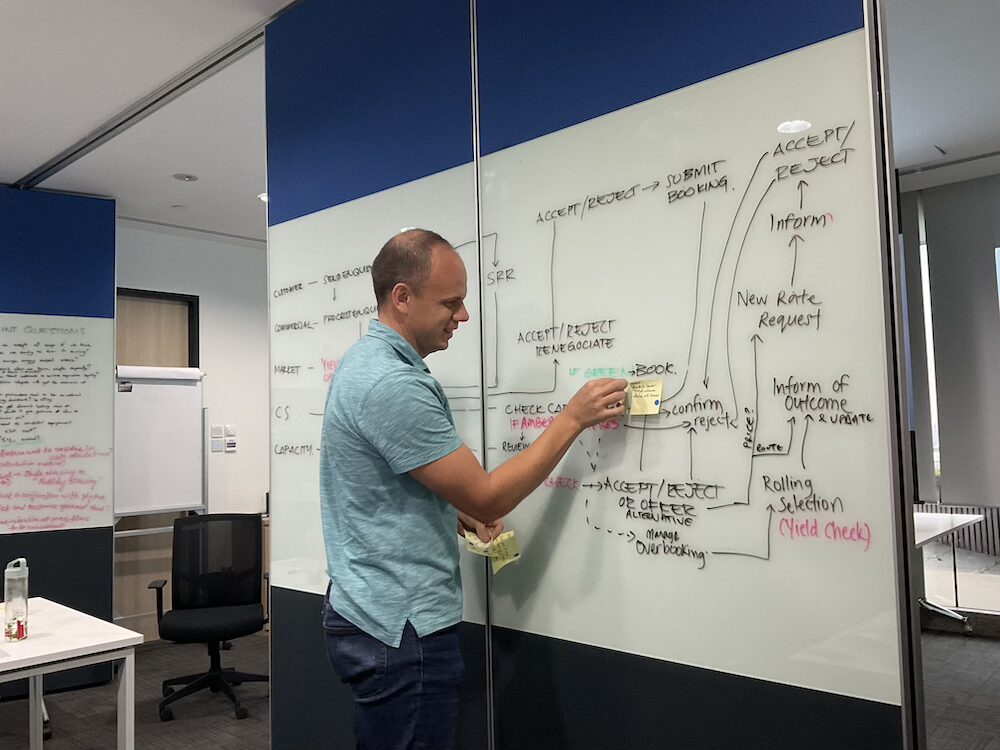
Day 1
Goal setting, map out process flows |
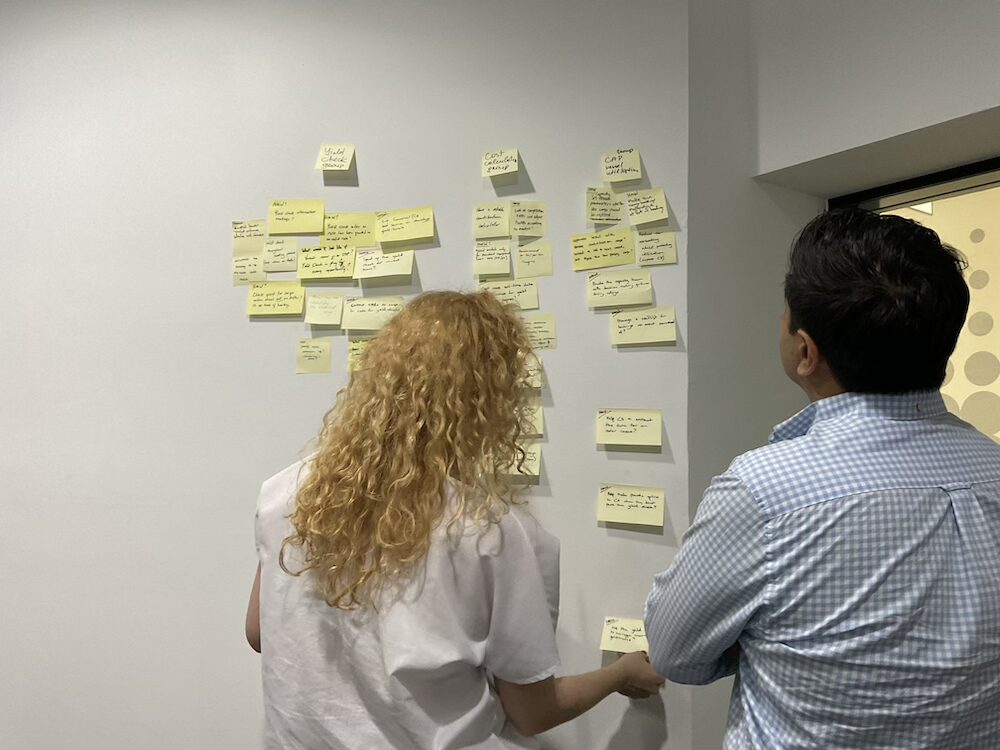
Day 2
‘How Might We’s’ and targeted the key flows to focus on |
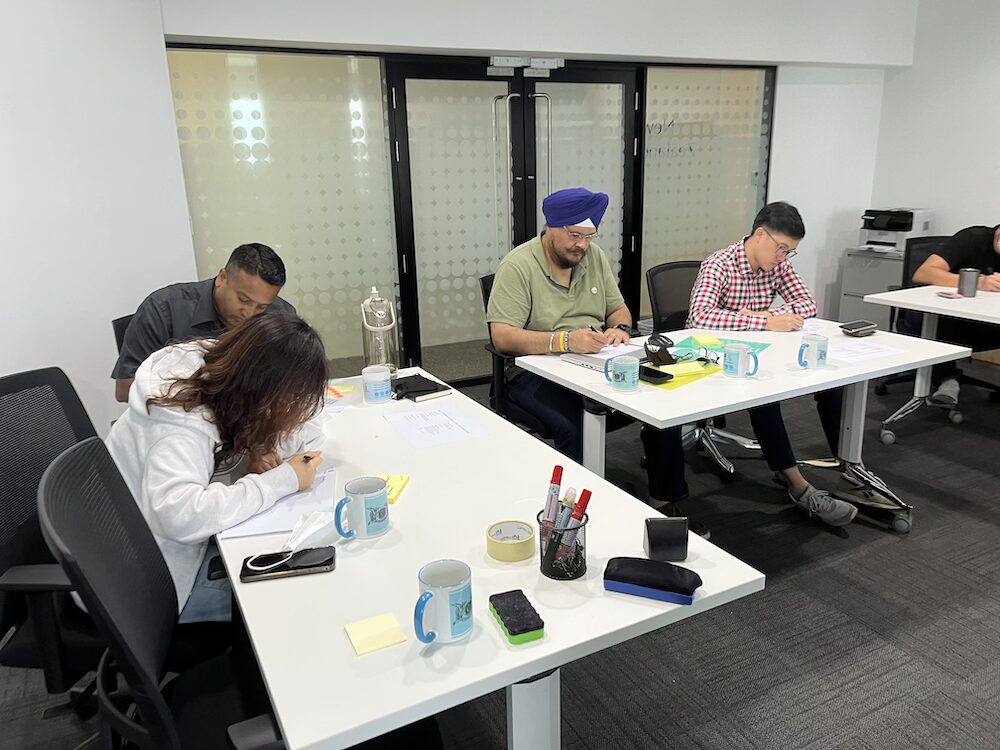
Day 3
Crazy 8s, Ideation sketching, and vote for best solution |
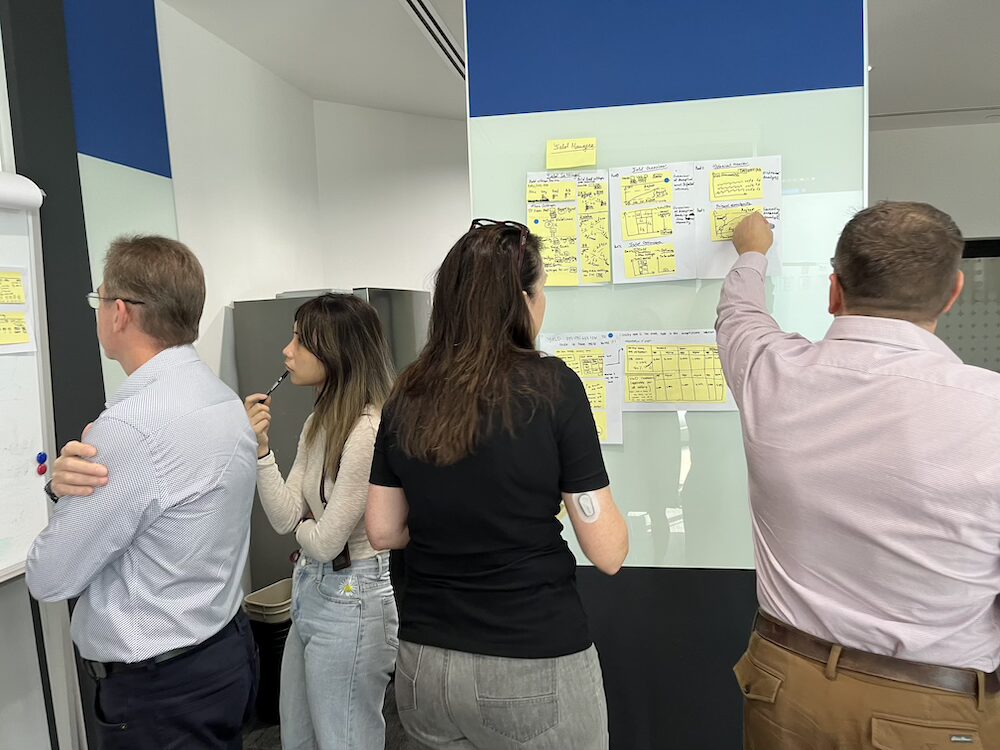
Day 4
Critique sketches, discuss and vote for best to be developed into storyboard |
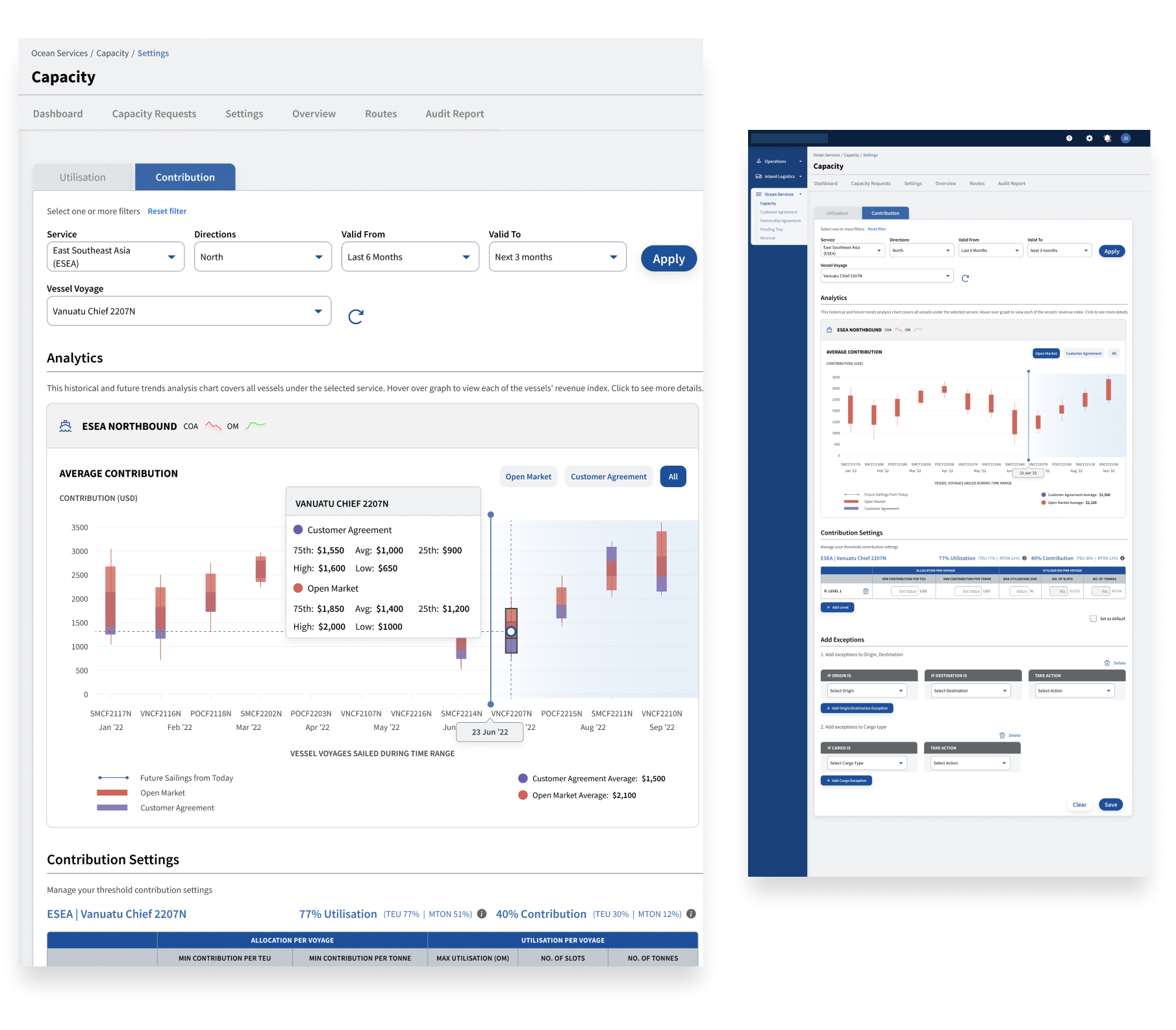 Day 5 Day 5
Trial test of prototype to working group to gather feedback |
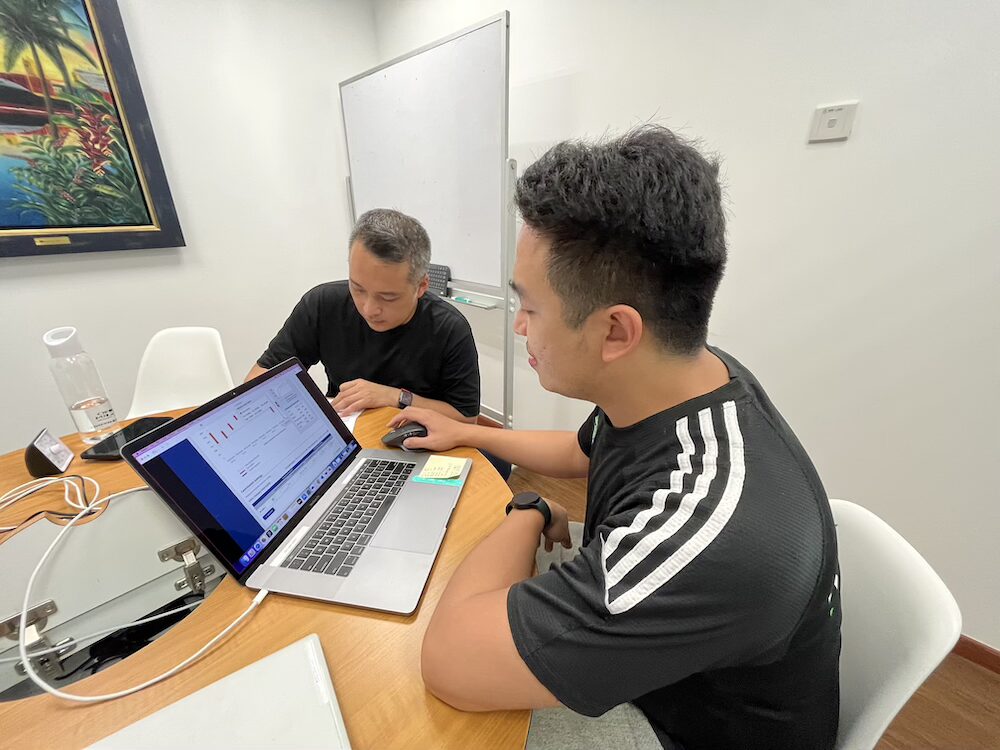
Day 6
User interviews to test prototype. Team observes in silence. By the end of the day, we reviewed the comments and decide next steps. |
Zoom into Day 5 – Designing the prototype under a day
- While building the prototype in Figma, we avoid building heavy prototypes—as they can be time-consuming.
- With the stakeholders, we aligned on 1–2 key flows to keep the prototype focused.
- For technical products such as SaaS enterprise software, it is necessary to use realistic scenarios to gather meaningful feedback during user testing
Day 6 – We put out the prototype for a real test with our users
- Having stakeholders observe back-to-back interviews live saves a lot of time
- Collaborative whiteboarding allows for quicker note-taking and shared visibility with stakeholders
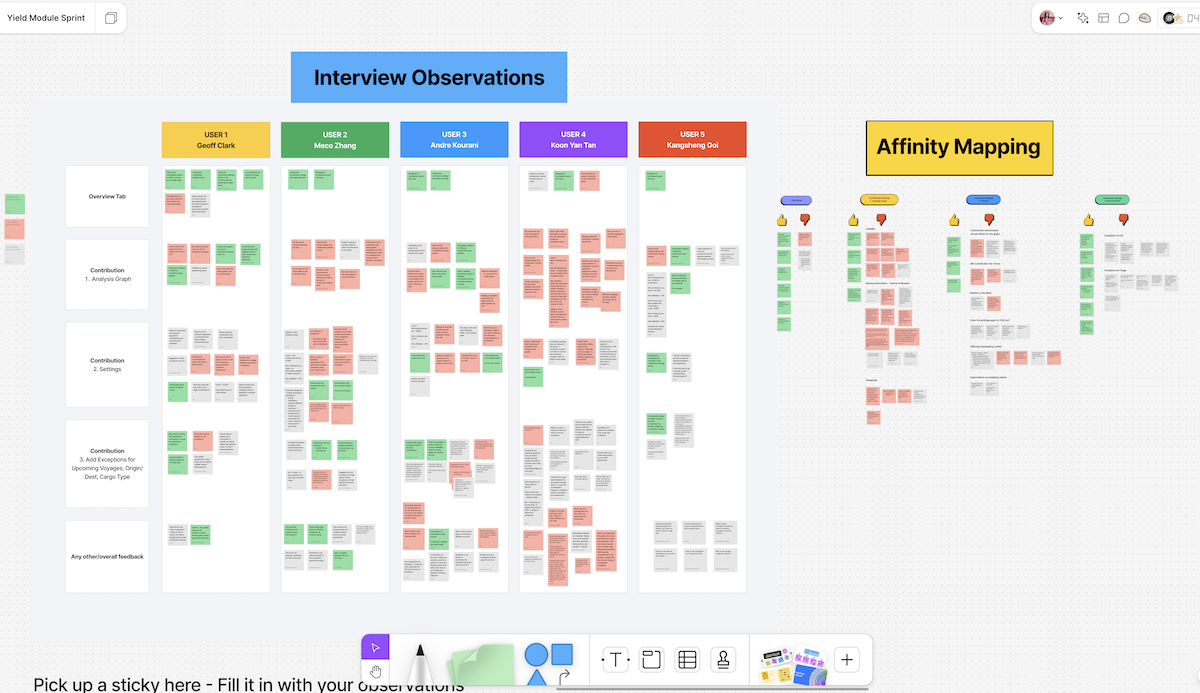
Live interview observations as the working team sat in the interviews in silence, while helping to pen down notes. At the end of it, I summarised into an affinity map to map out common themes. This sped up decision-making, and we could agree on what our next steps would be. |
Key reflections
Driving alignment through design workshops
I use design workshops to bring stakeholders into the same room, align perspectives, and move decisions forward quickly. Instead of long back-and-forth over Microsoft Teams, I facilitate focused discussions where teams challenge assumptions, resolve differences, and commit to a direction together. It SAVED everybody’s time in the long run because in this short period of time, we are able to build fast and fail fast.
Be flexible on the no. of days required
Getting all the stakeholders in the same room for a few (entire) days can be met with some pushback. I learned to be flexible so we can make it a realistic undertaking for our stakeholders. I adjust the workshop structure to match stakeholders’ availability and constraints.
Leading high-intensity, high-impact sessions
I guide the team through rapid exercises, keep discussions focused, and push for clear outcomes at each stage. These sessions can be intense, but they create energy and alignment. By the end, stakeholders move from uncertainty to shared clarity, with decisions they feel confident owning.
Positive feedback from stakeholders
Some of them mentioned:
- “Really insightful session. Great hearing different perspectives with folks from other teams.”
- This was one of the most engaging discovery workshops I’ve attended. I would attend another in the future.”
- “Excited to see where this MVP will take us.”
- “Amazed at how polished the prototype looked in such a short time. Kuddos to the team for pulling that off.”
