
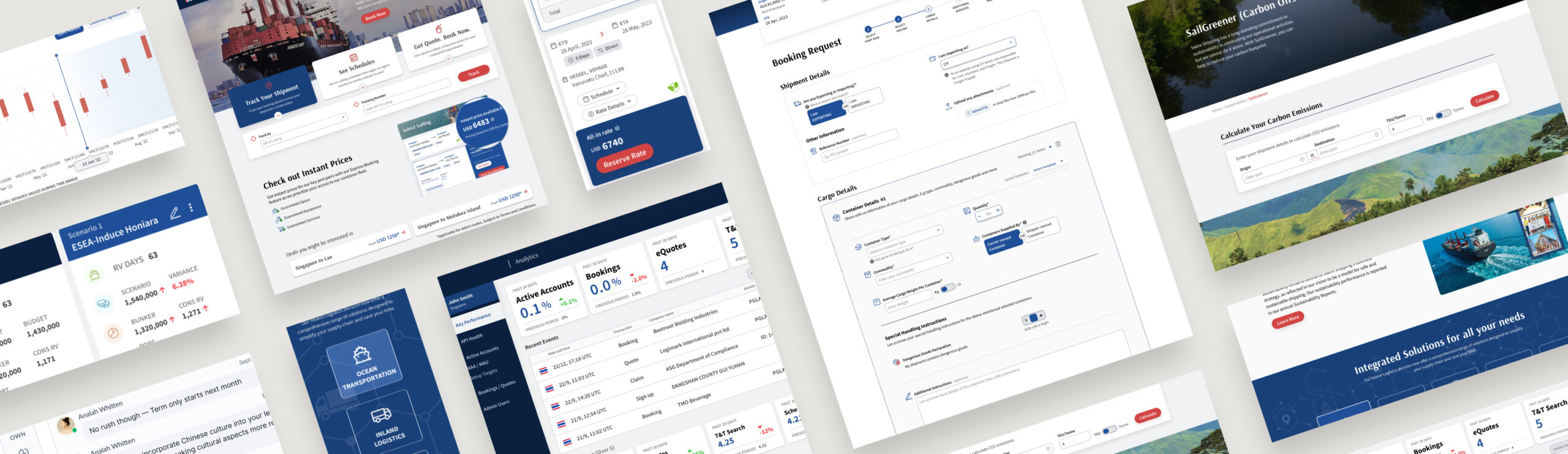
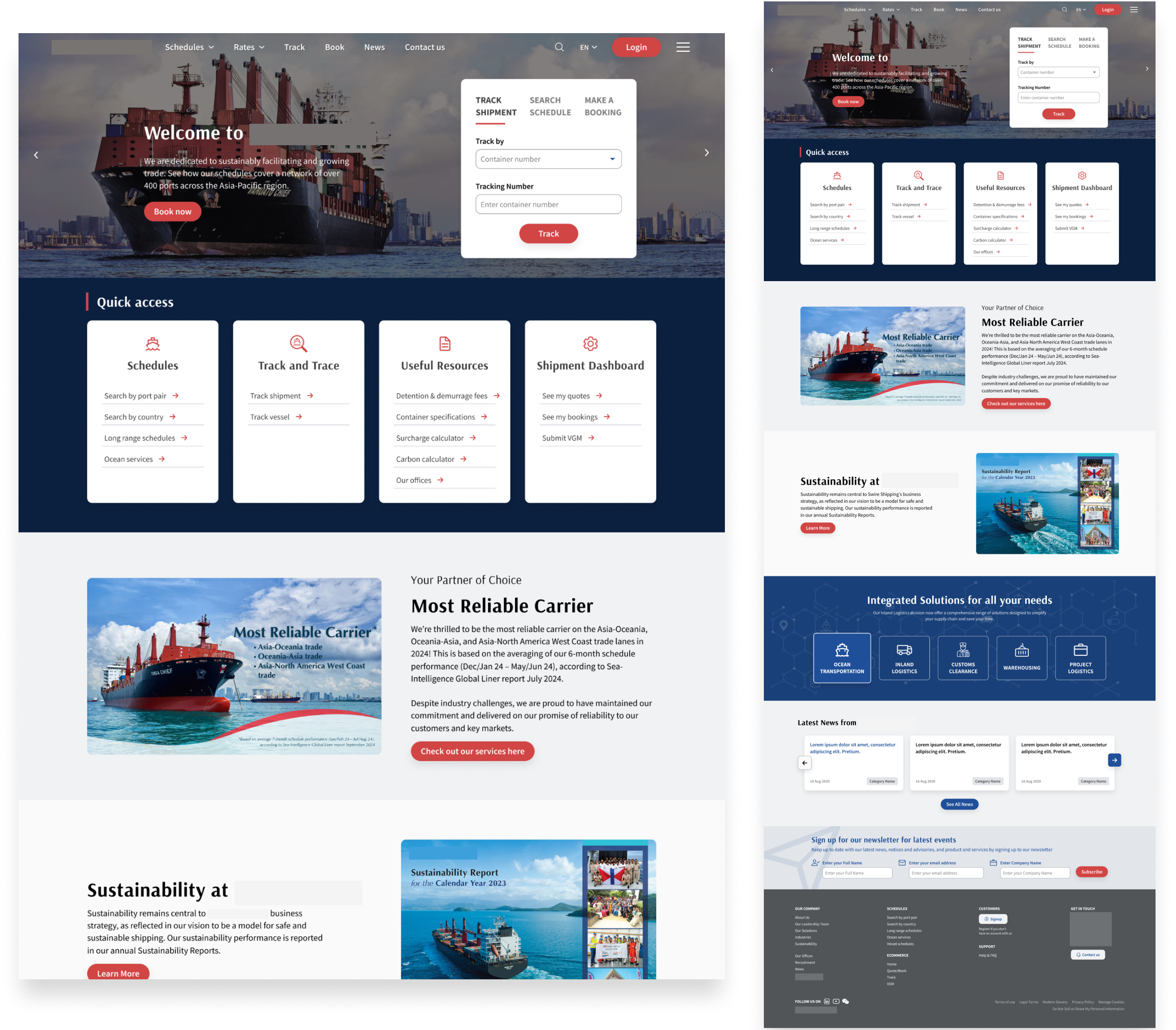
Post-COVID in July 2021, as digital transformation begins to reshape the shipping industry, Nexus Shipping set out to develop a comprehensive e-commerce platform, enabling customers to manage their shipments seamlessly online.
Nexus Shipping lacked an online eCommerce platform that can provide a quote and book system, relying on phone and email for transactions. As customer demand for real-time shipment updates grew, the absence of a digital platform put them at a disadvantage against competitors with strong online capabilities.
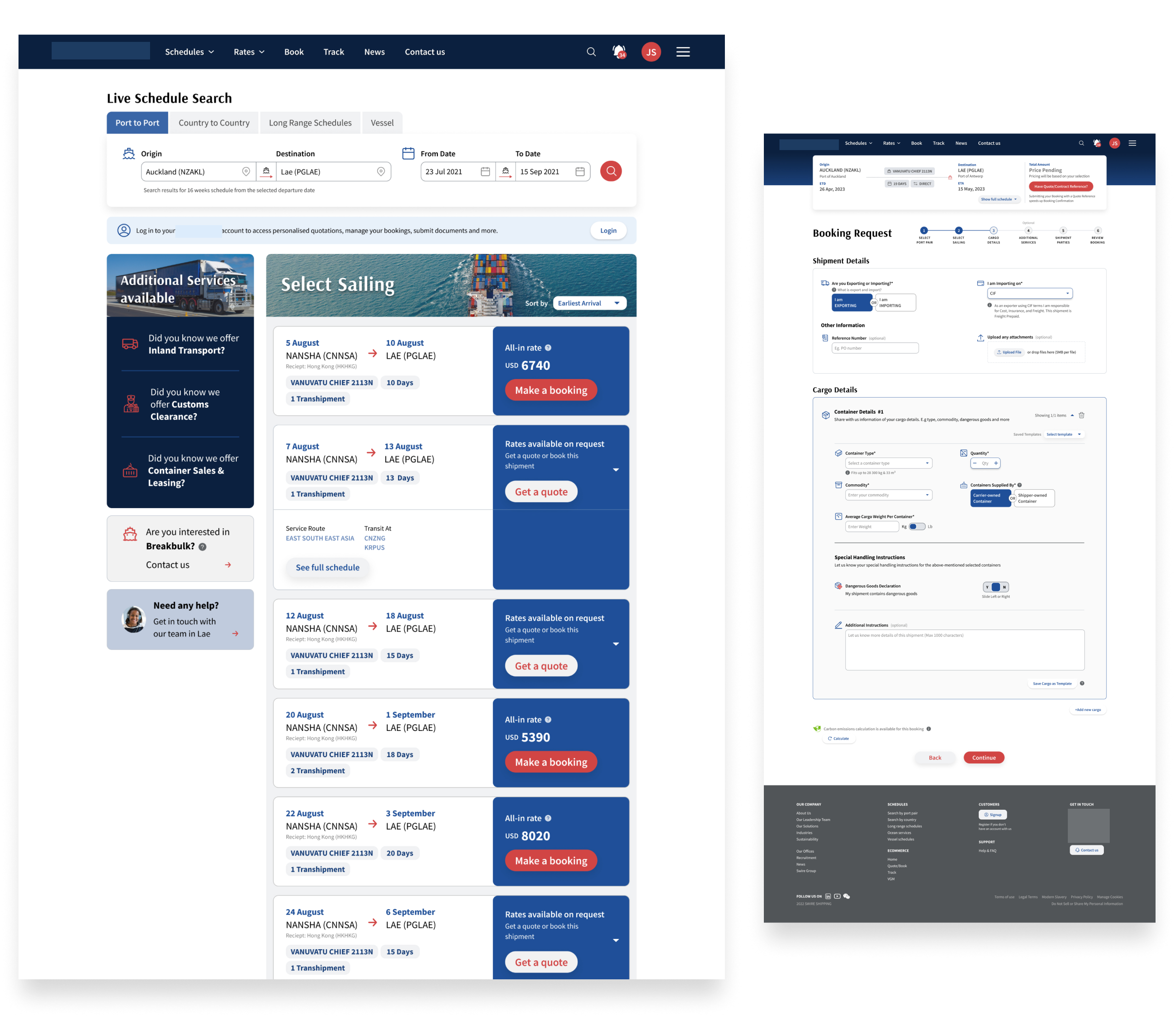
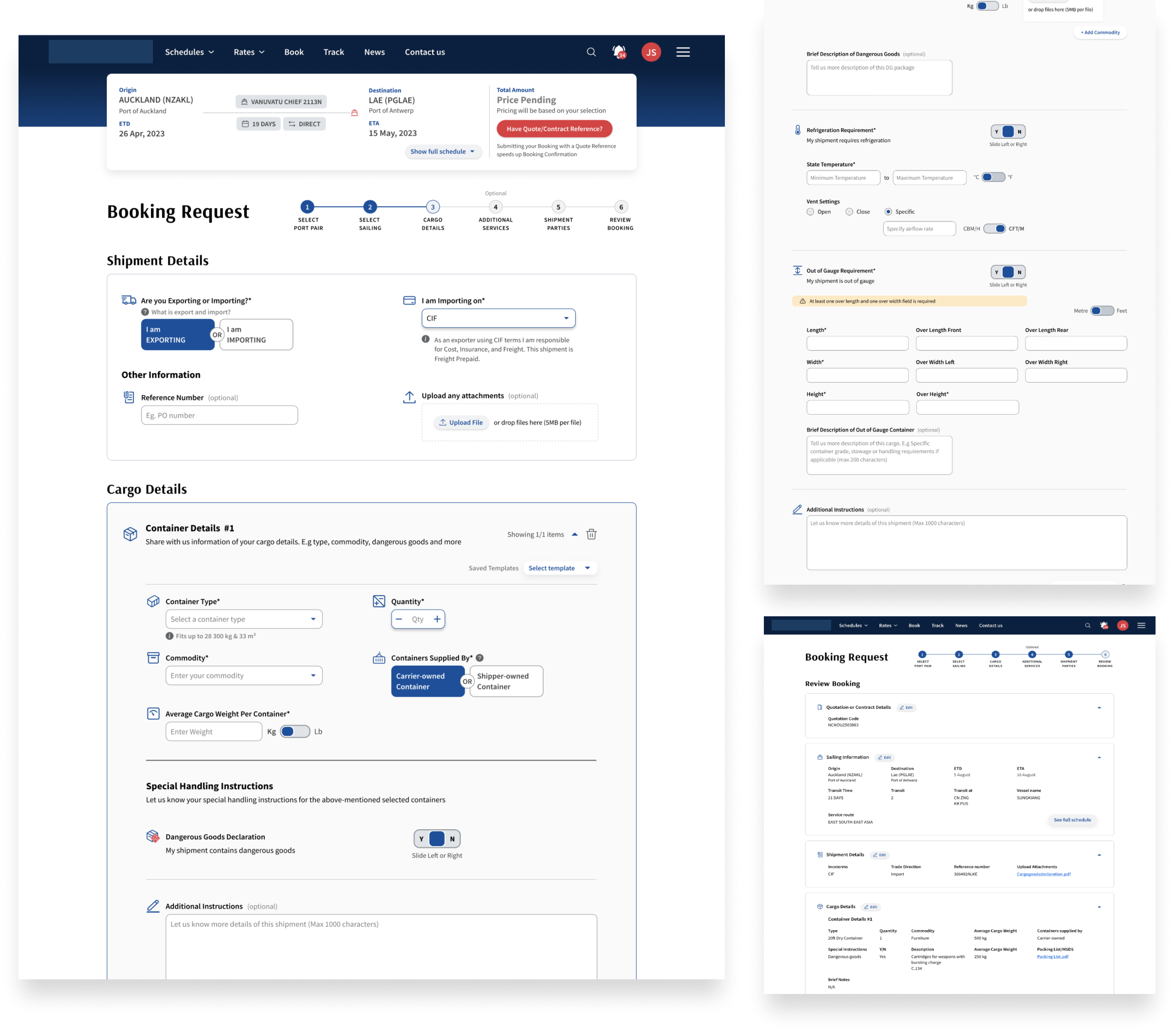
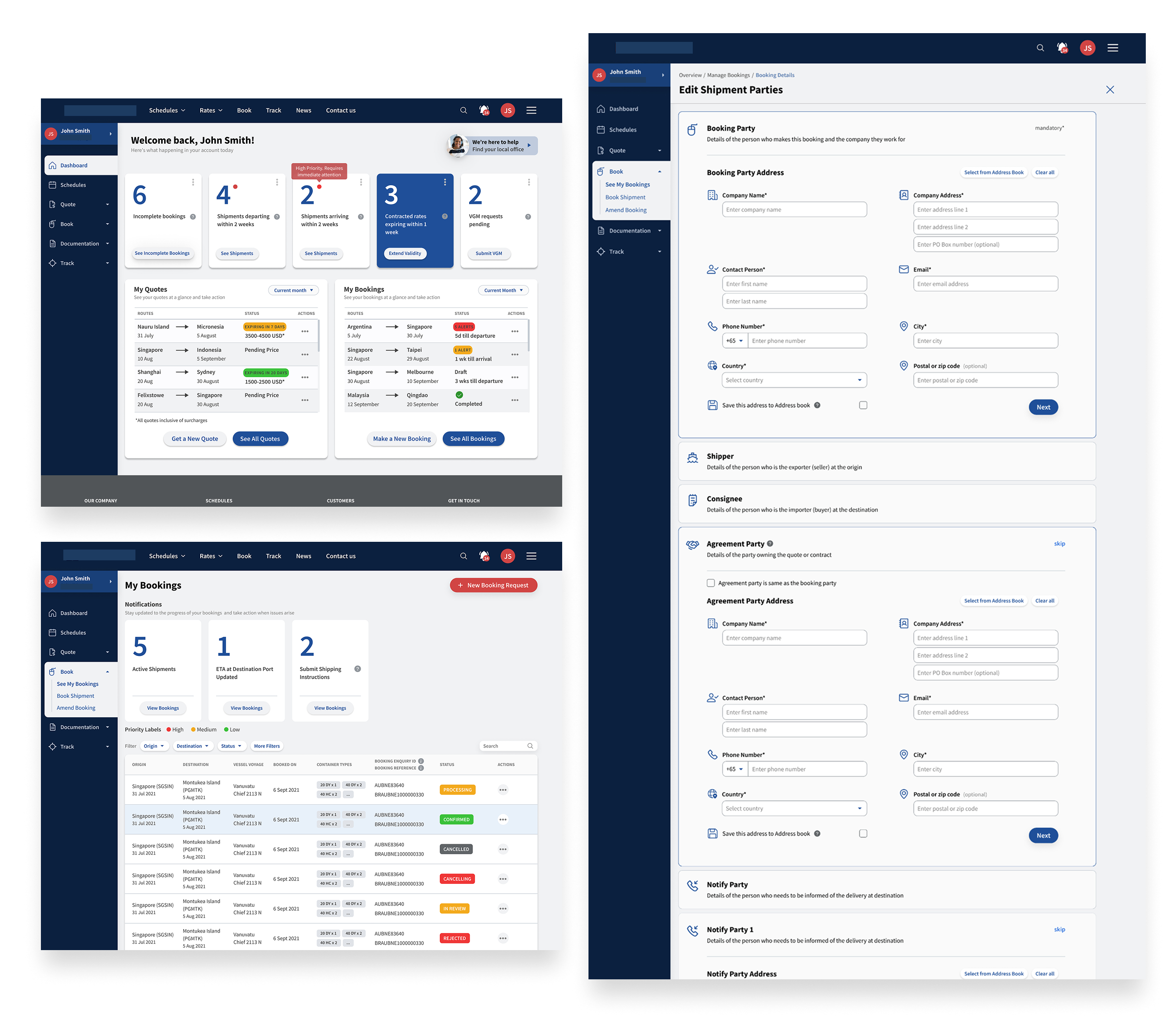
Research, strategise and design an end-to-end user experience to help customers create and manage their bookings in a seamless and transparent way. The focus is to increase usage of the platform by converting 10% of Nexus’ customers to transact online.
Digital transformation in shipping is in its early stages. To stay competitive, we need to deeply understand:
I dived into a 4-week research sprint where I engaged with stakeholders across key markets, interviewed 10+ customers and benchmarked competitor website features.
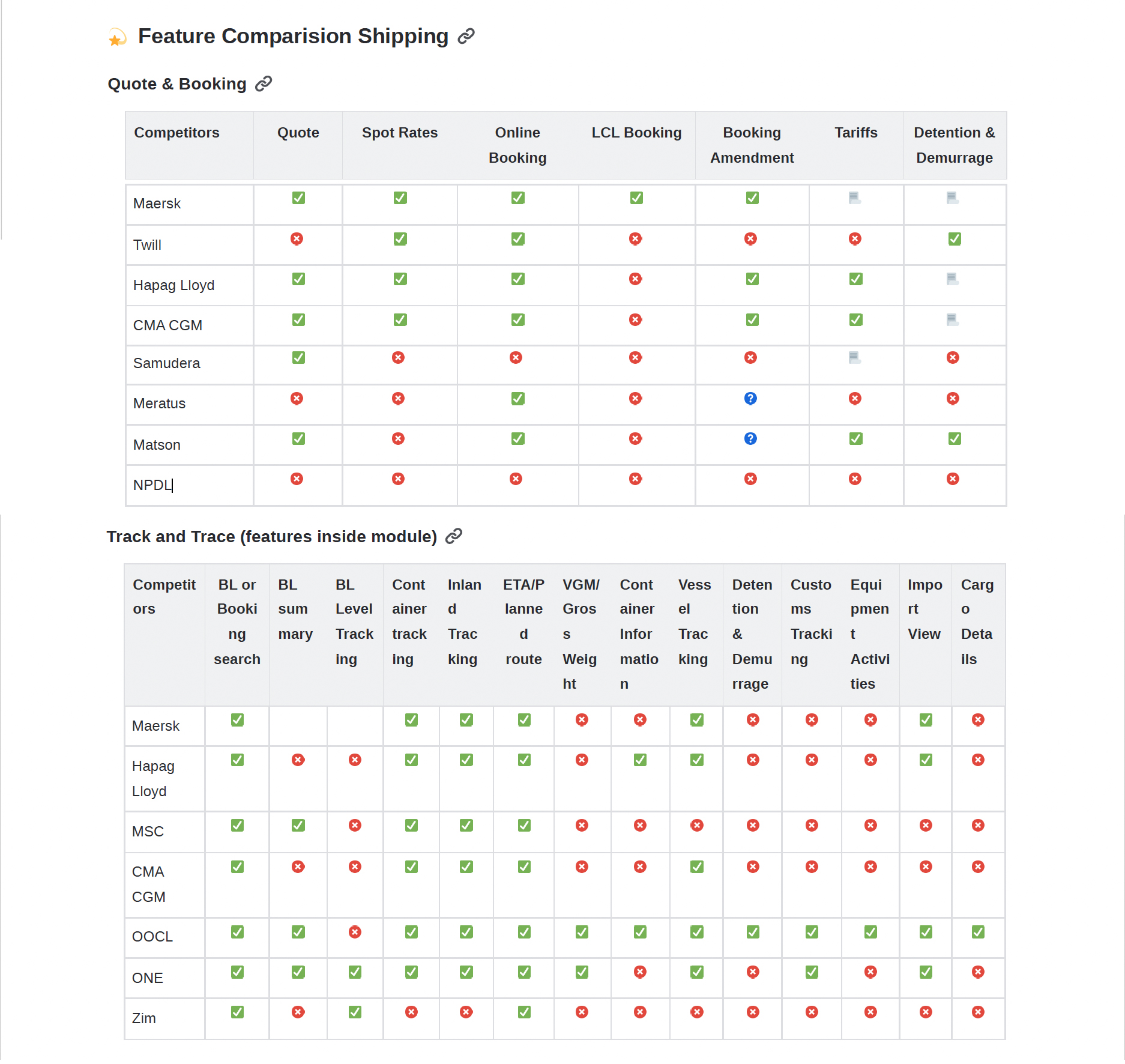
Competitor analysis benchmarking |
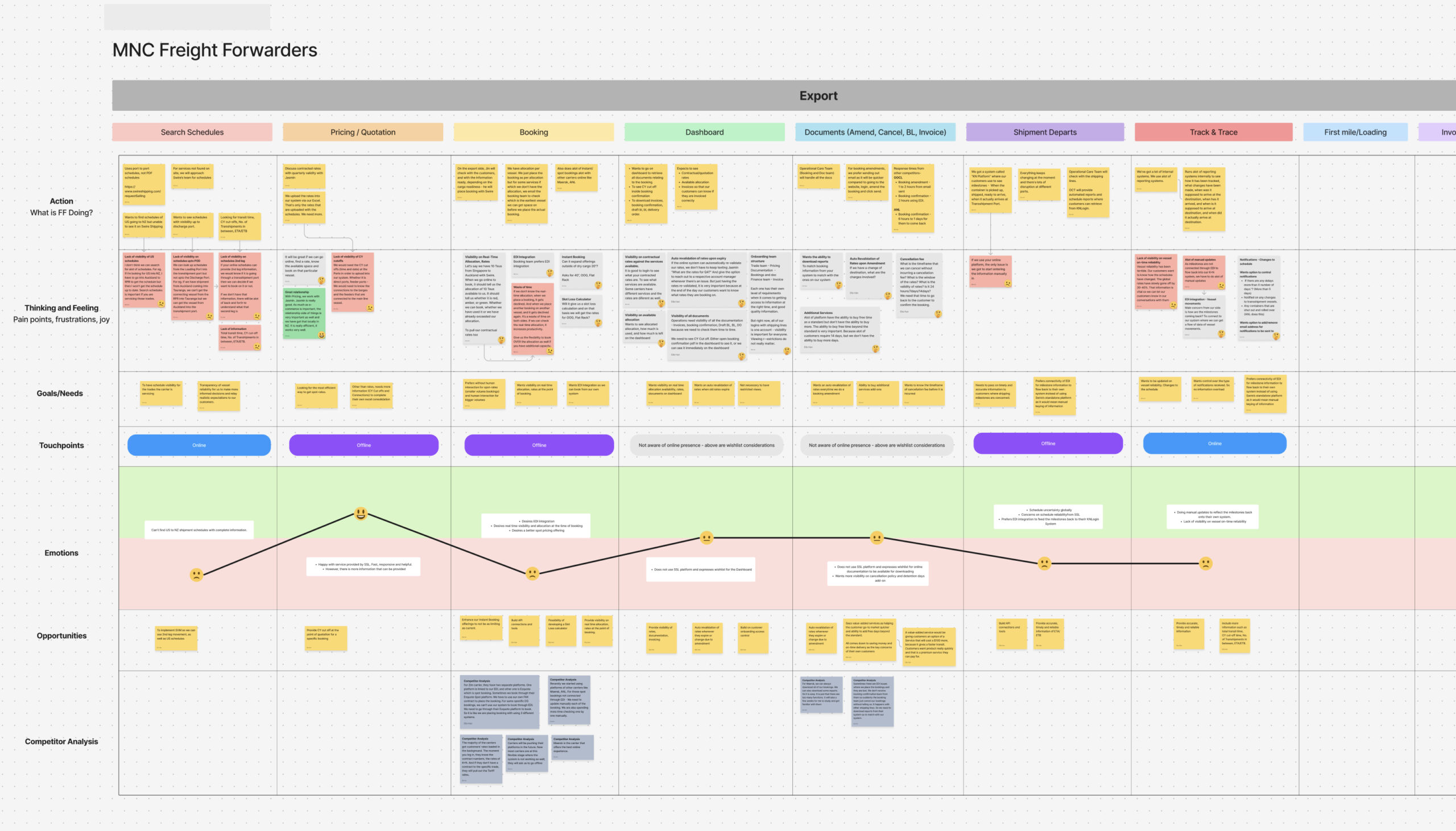
User Journey from start to end of our eCommerce offerings |
 |
 |
 |
 |
After we launched the website revamp and let it run for a year. We studied our Google Analytics and user metrics to see how it was doing. We found that:
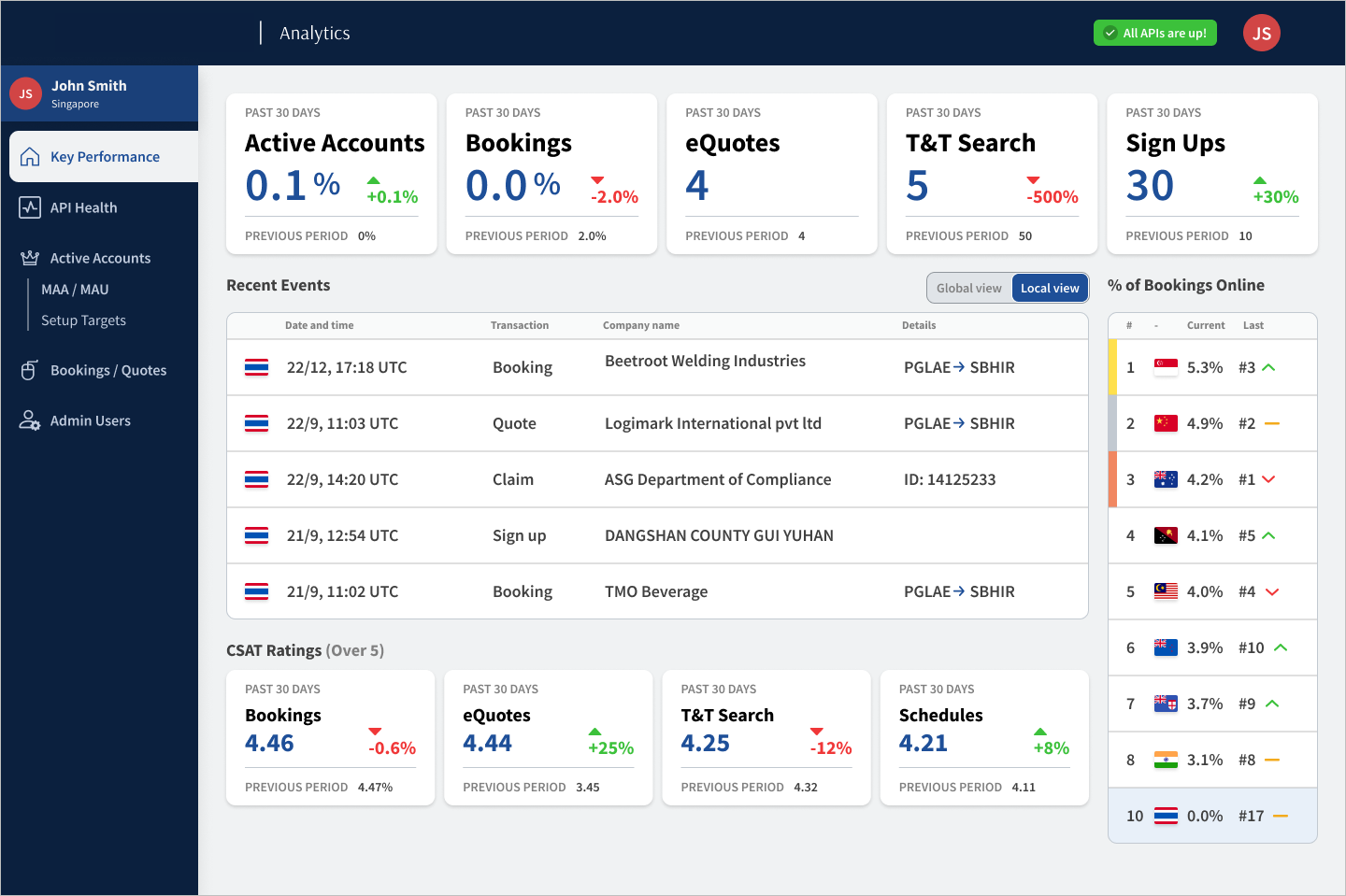
To drive uptake, we provide business stakeholders a high-level eCom activity dashboard for visibility and encourage country offices to boost eCom usage through performance-based standings.
Our design system that was created for this project was able to scale Nexus’ branding to multiple products, and to partners as well.
Sharing analytics with stakeholders regularly helped to get buy-in and alignment. A key strategy to work effectively in a big organisation.
Adoption is often slow and needs a consistent push across departments.
We launched fast, test often and iterate based on data.