
Made in Figma Make
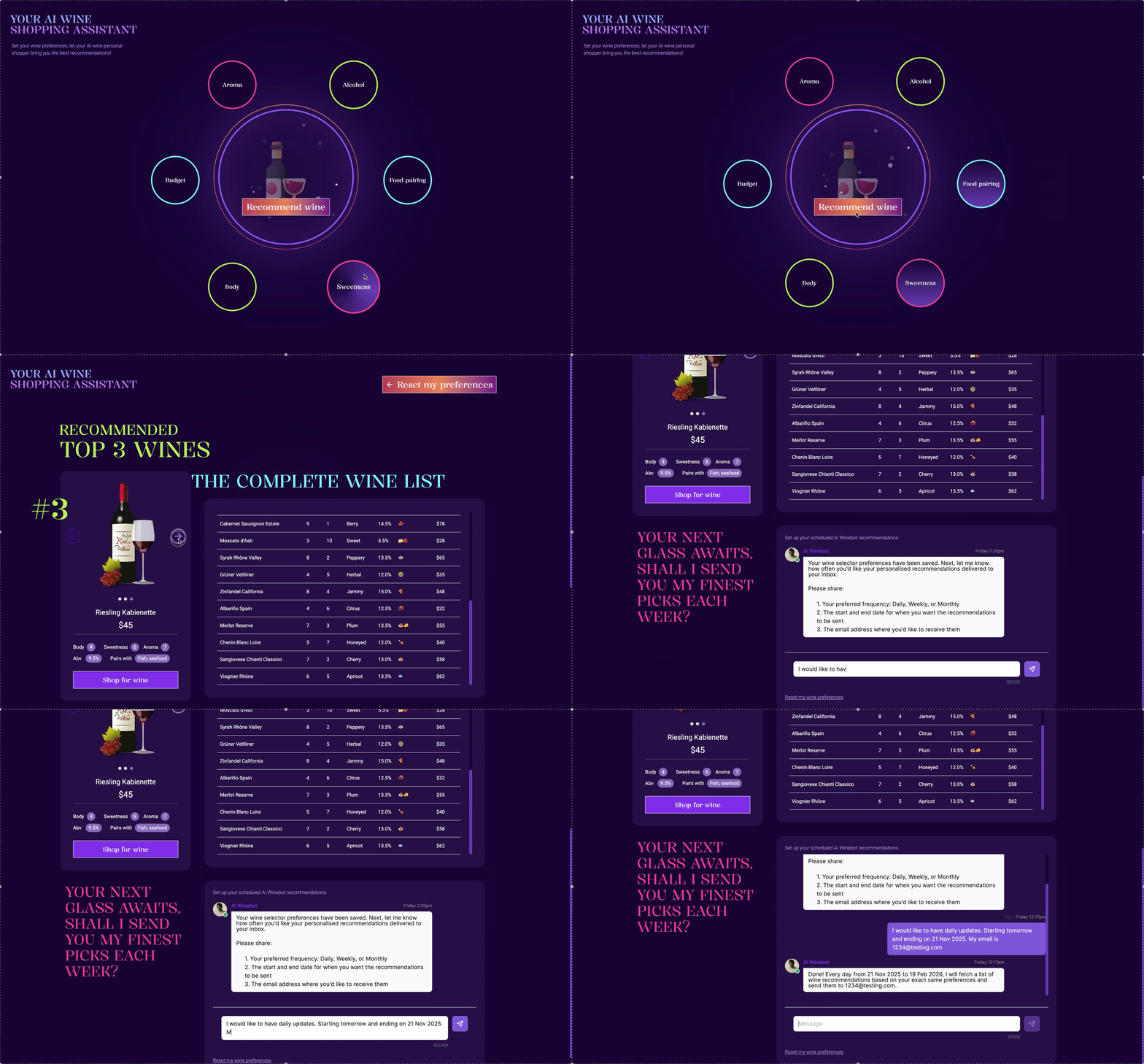
I designed a desktop-first concept called “Your AI Wine Shopping Assistant”, an AI-powered tool that helps users discover wines tailored to their taste while hunting for the best deals across the internet.
This project sits at the intersection of personalisation, e-commerce, and AI aggregation. It targets casual drinkers and collectors who care about taste, but are equally sensitive to price. Instead of browsing endless wine listings, users define their preferences once and let the system do the heavy lifting.
Buying wine online is inefficient and overwhelming.
Most platforms force users to:
Even worse, deals are scattered across different retailers, making price comparison tedious.
The core issue is simple:
Users don’t lack options, they lack clarity and aggregation.
I wanted to design an experience that:
At the same time, I aimed to make the experience feel:
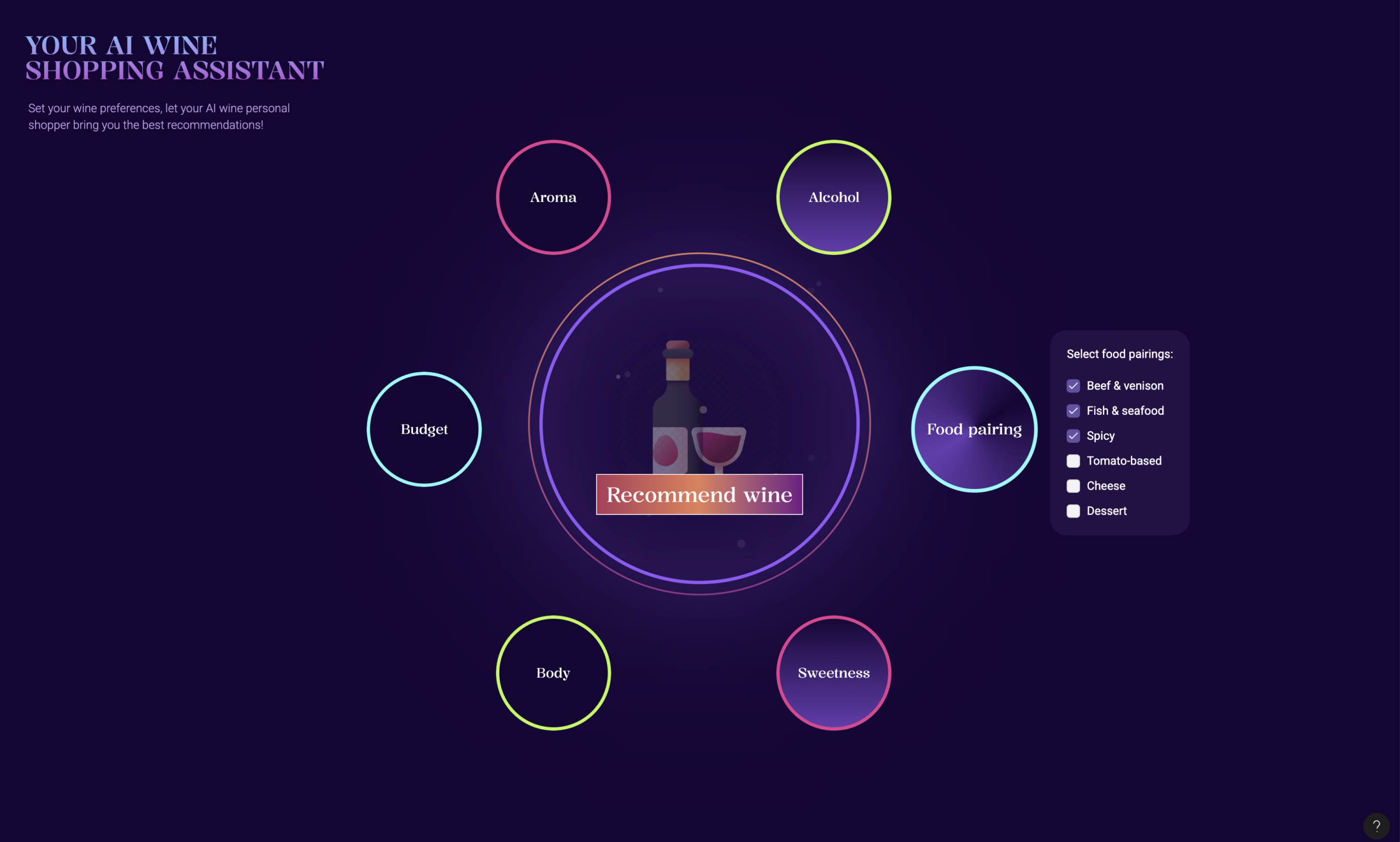
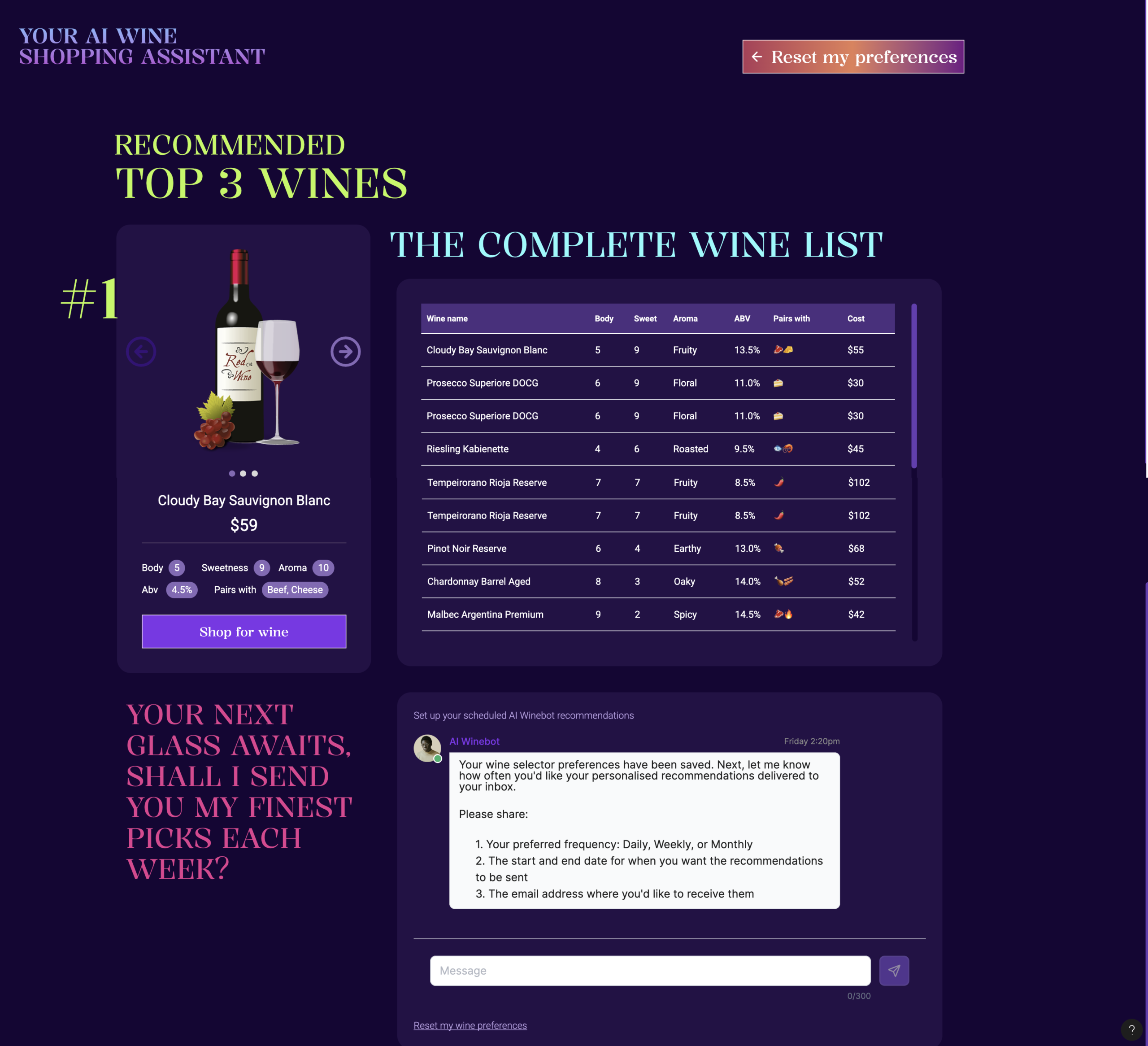
With a simple two-page flow, this project is less about wine and more about understanding user intent.
The real question I kept coming back to was:
How do you take complex decision-making and turn it into something simple, guided, and even enjoyable?
Reducing cognitive load became the core design principle. Every interaction was designed to remove friction, not add choice.
When users are not just filling in fields but actively interacting with a system, the experience feels more natural, more responsive, and less transactional.
It shifts the mindset from “I’m submitting information” to “I’m shaping my outcome.”
This project reinforced that AI on its own is not the solution. Structure is what makes it useful.
The real value comes from combining:
It is not about generating outputs quickly. It is about designing systems where AI meaningfully supports human decision-making, rather than replacing it.